Lab diamond tennis bracelets
One unbroken line of matched diamonds, hinged so it moves with the wrist. It is the piece that shows the most diamond for the money — a tennis bracelet carries twenty to sixty stones instead of one, so choosing lab-grown compounds the saving across every setting in the row rather than just the centre.
25 designs, each made to order in 10K, 14K or 18K gold, sterling silver or platinum. Prices shown are a starting point; designs without one are quoted on enquiry.
- Designs
- 25 made to order
- Starting at
- $4,530
- Lengths
- 15–19 cm (6–7.5 in)
- Metals
- 10K / 14K / 18K gold, silver, platinum
Shop tennis bracelets
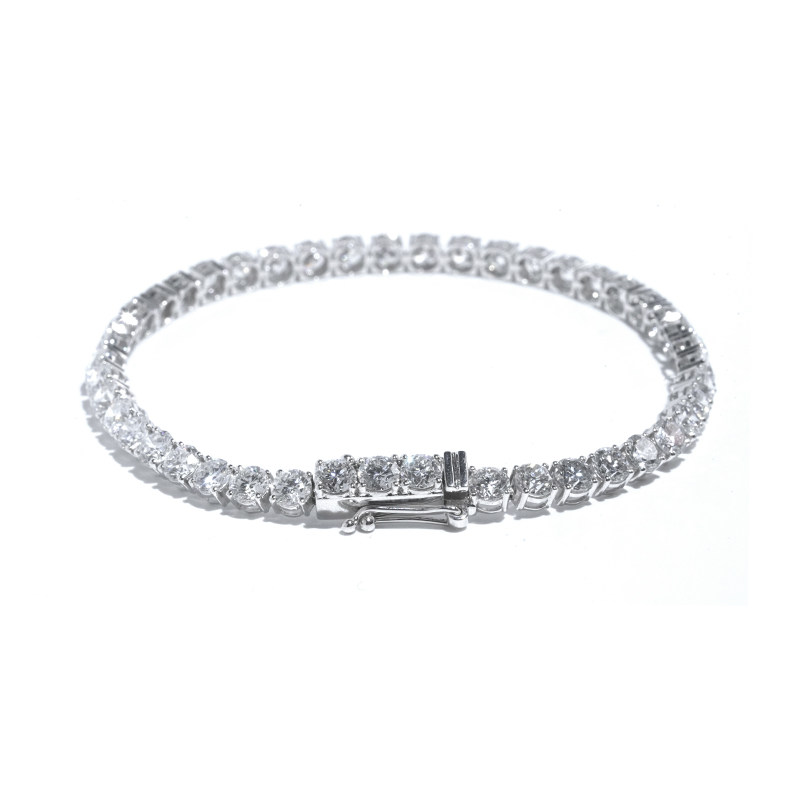
4 Prong Dual Layer Open Gallery Round Lab Created Diamond Tennis Bracelet
from $4,530
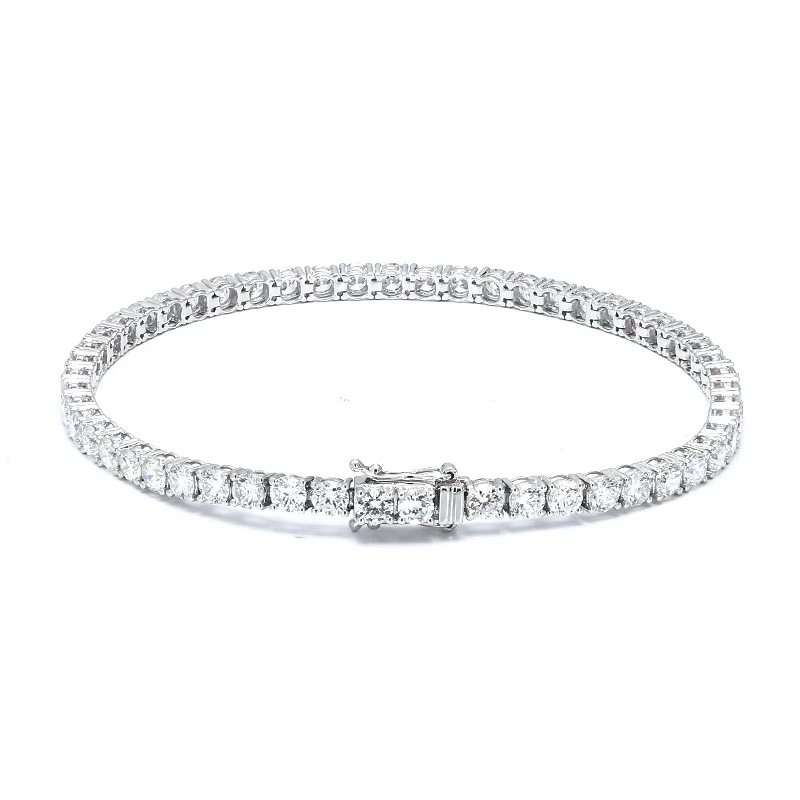
Round Four Prong Lab Grown Diamond Tennis Bracelet In 18K White Gold
from $4,980
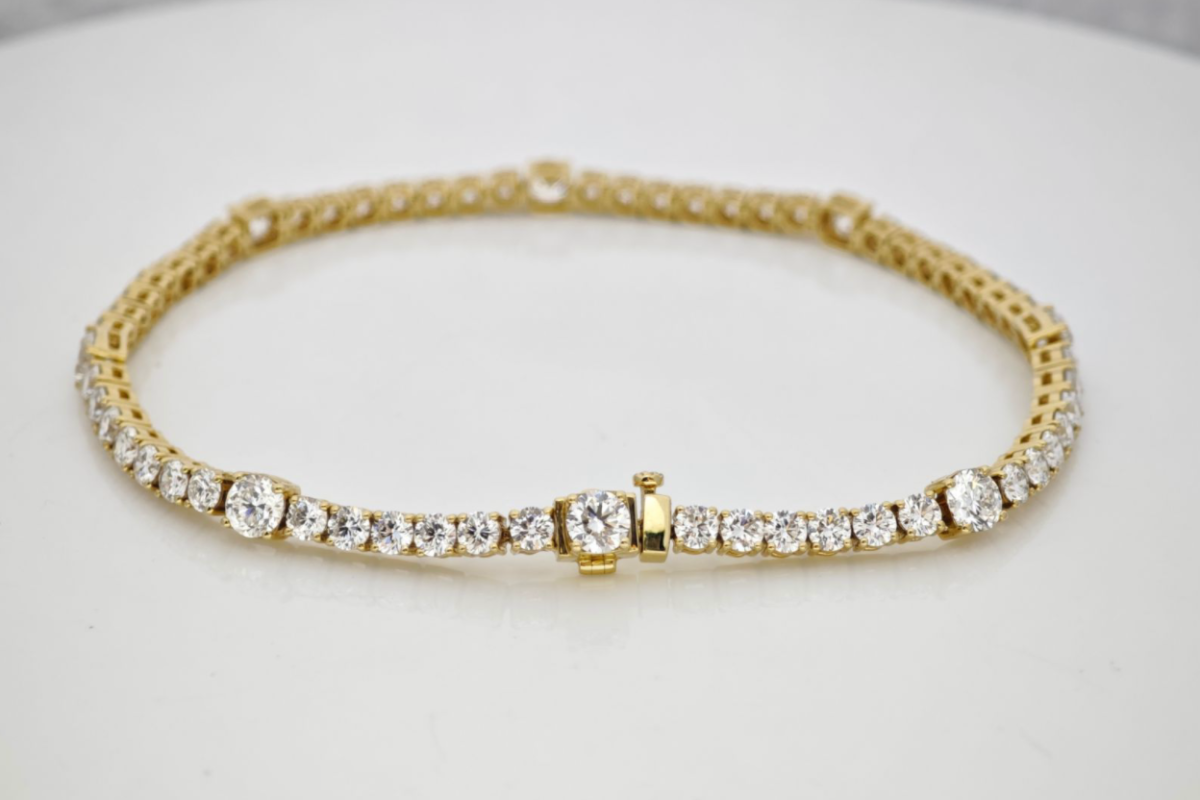
Graduated Accent Round Synthetic Diamond Luxe Classic Tennis Bracelet
from $5,870
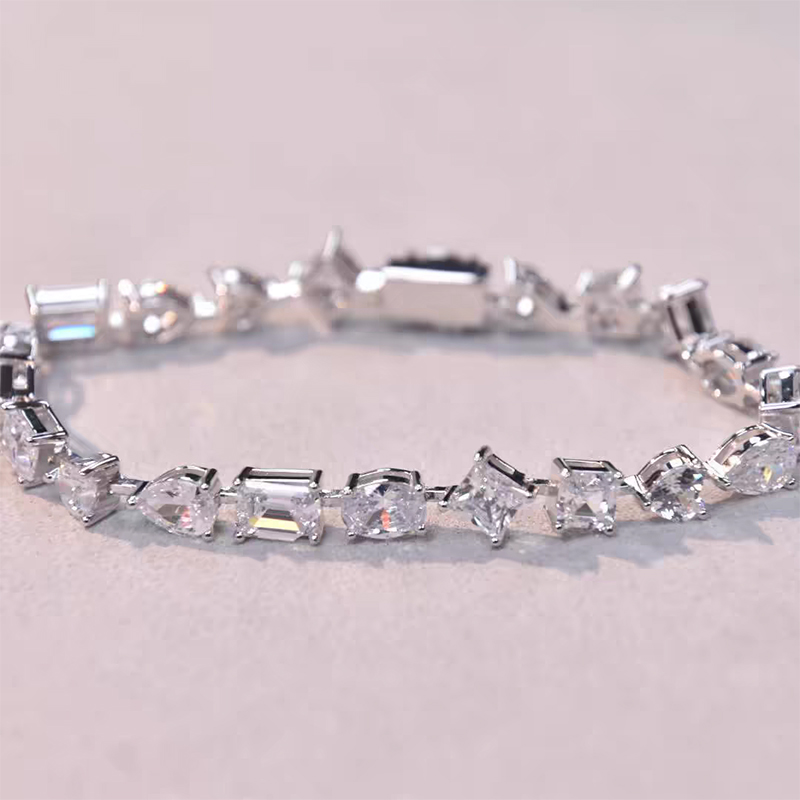
Mixed Shape Prong Set Lab Grown Diamond Tennis Bracelet
from $6,710
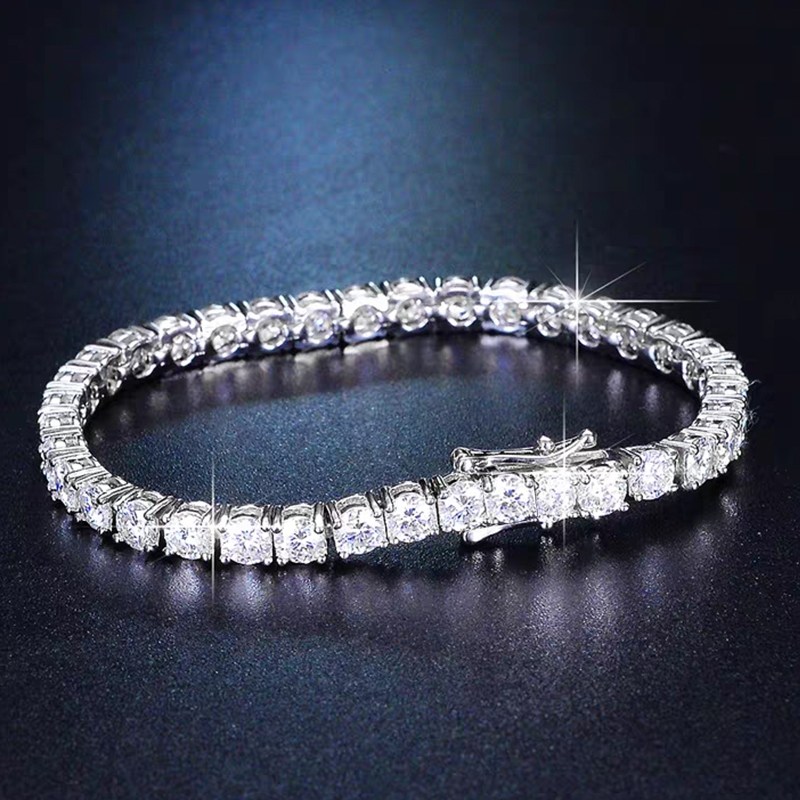
Full Round Prong Man Made Diamond Classic Tennis Bracelet
from $7,480
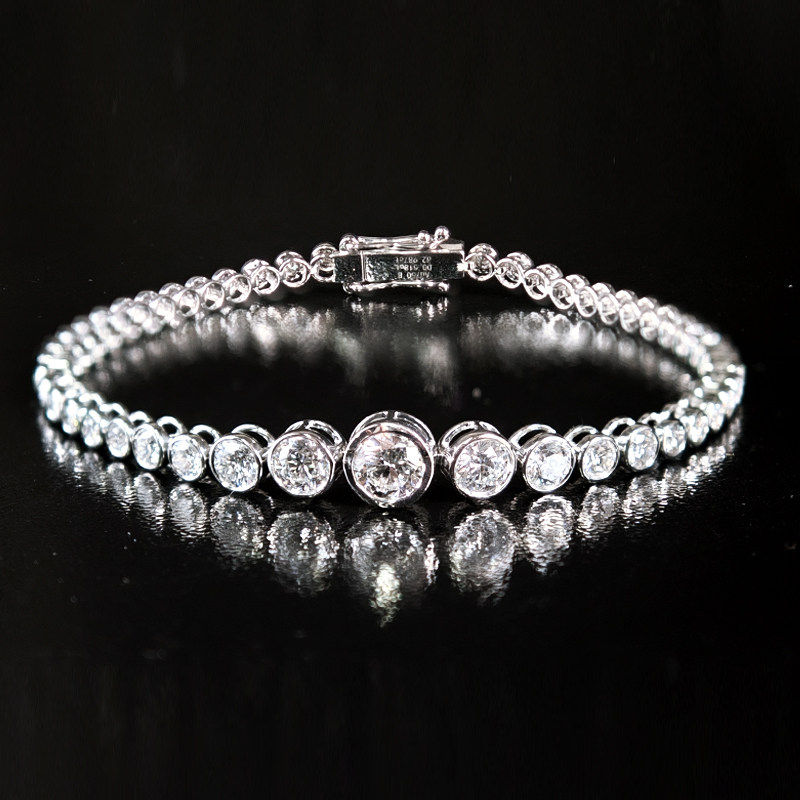
Continuous Bubble Bezel Set Dual Layer Open Gallery Diamond Tennis Bracelet
from $7,600
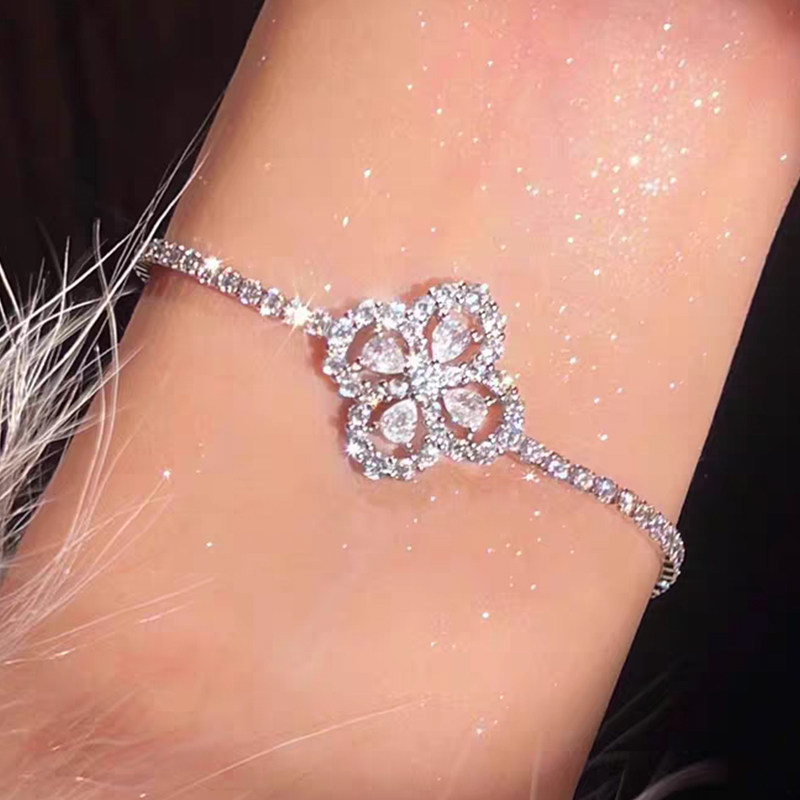
Four-Leaf CLover Frame Pave Bracelet With Tennis Chain in White Gold
from $8,150
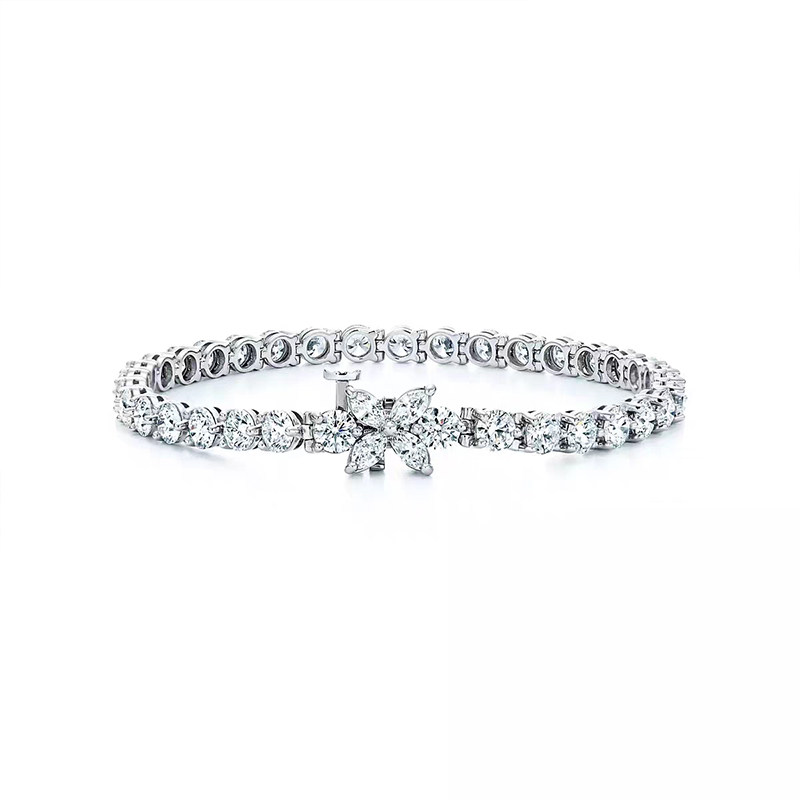
Continuous Shared Prong Open Gallery Lab Diamond Floral Motif Tennis Bracelet
from $9,430
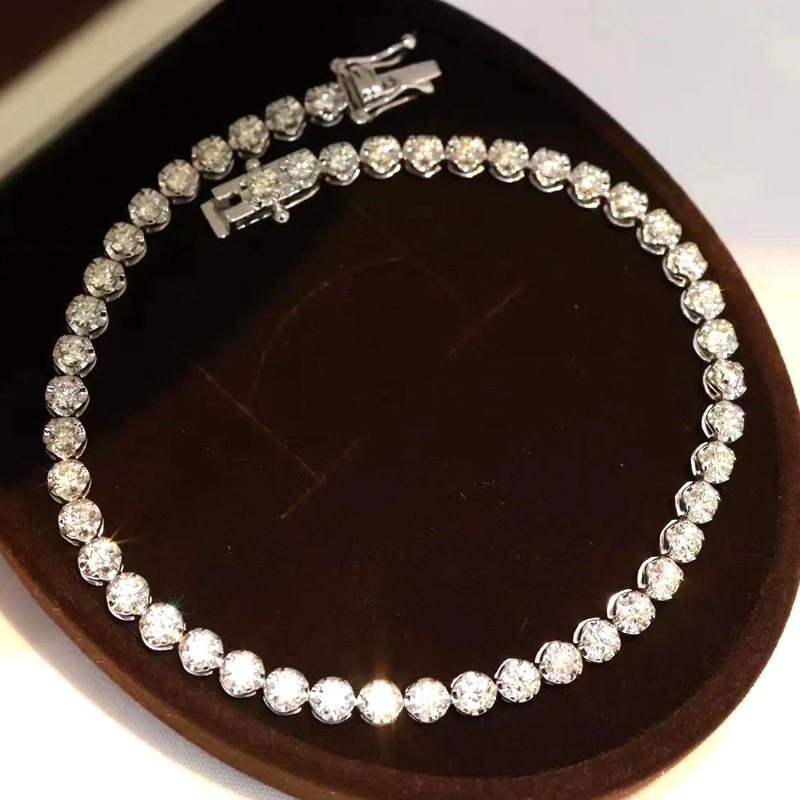
Full Row Uniform Round Lab Grown Diamond Sparkling Classic Tennis Bracelet
from $11,640
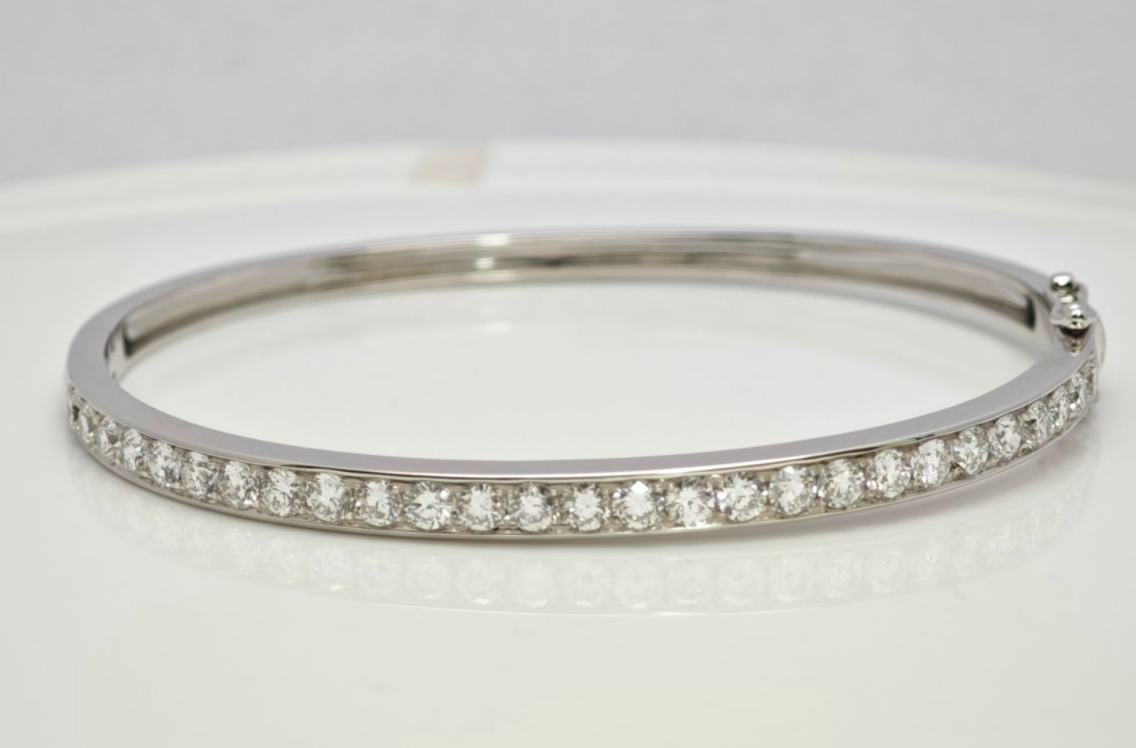
Half Row Channel Set Round Synthetic Diamond Sleek Classic Tennis Bangle Bracelet
from $11,720
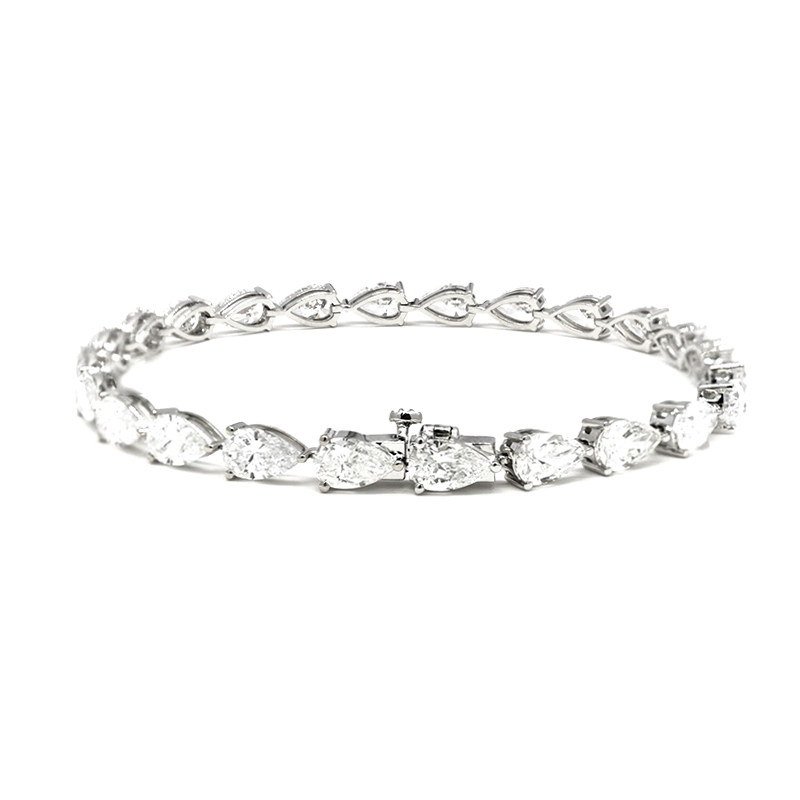
Continuous 3 Prong Pear Cut Diamond Open Gallery & Open Bottom Set Tennis Bracelet
from $11,910
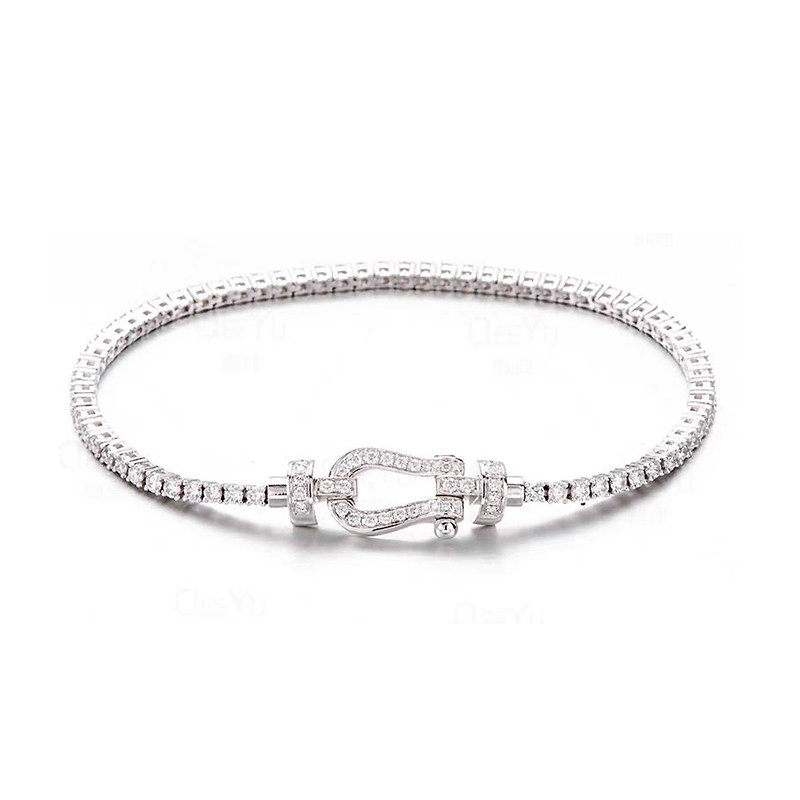
Continuous 4 Prong Square Setting Lab Diamond Tennis Bracelet With Shackle Clasp
from $12,230
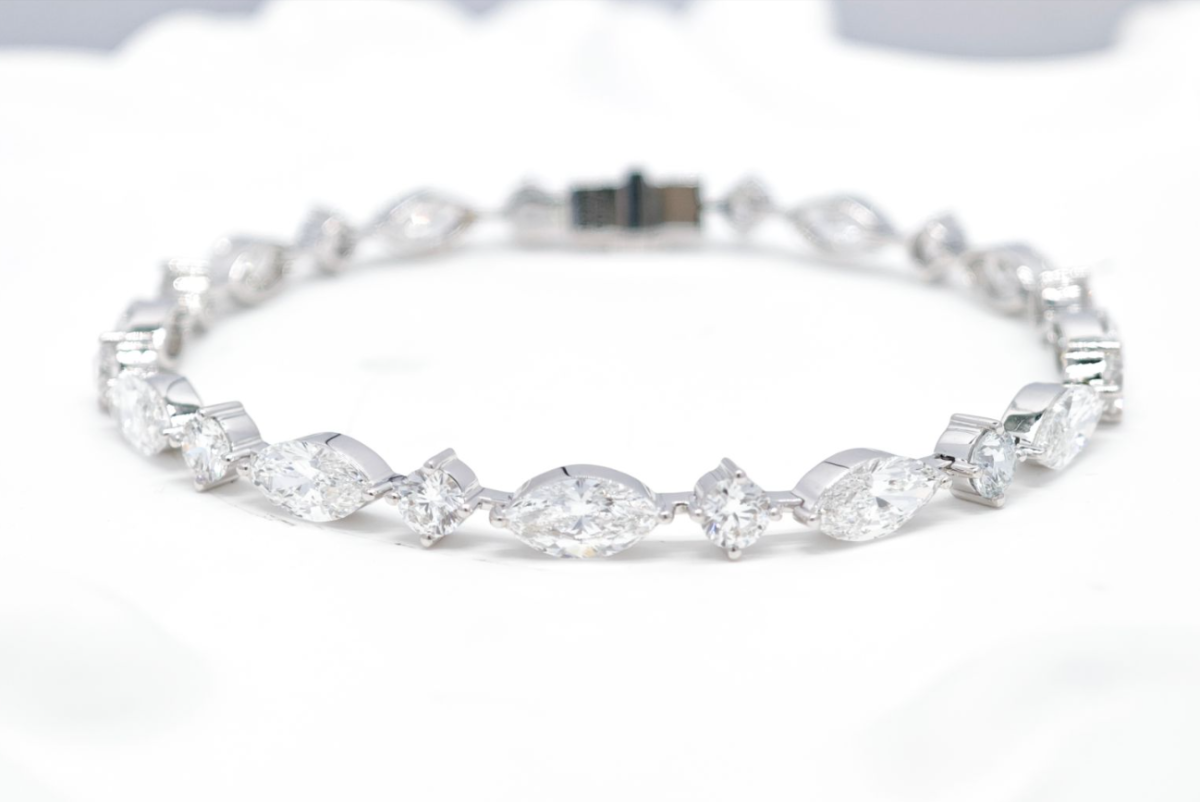
Alternating Marquise Round Lab Grown Diamond Art Deco Inspired Tennis Bracelet
from $14,280
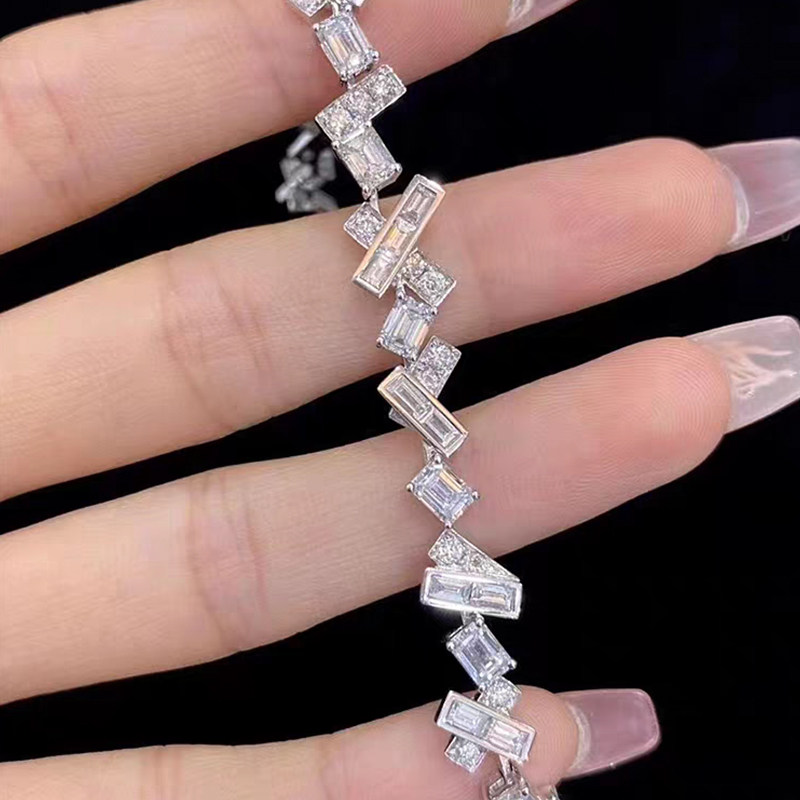
Alternating Crisscross Baguette Pave Linear Lab Diamond Bracelet
from $14,730
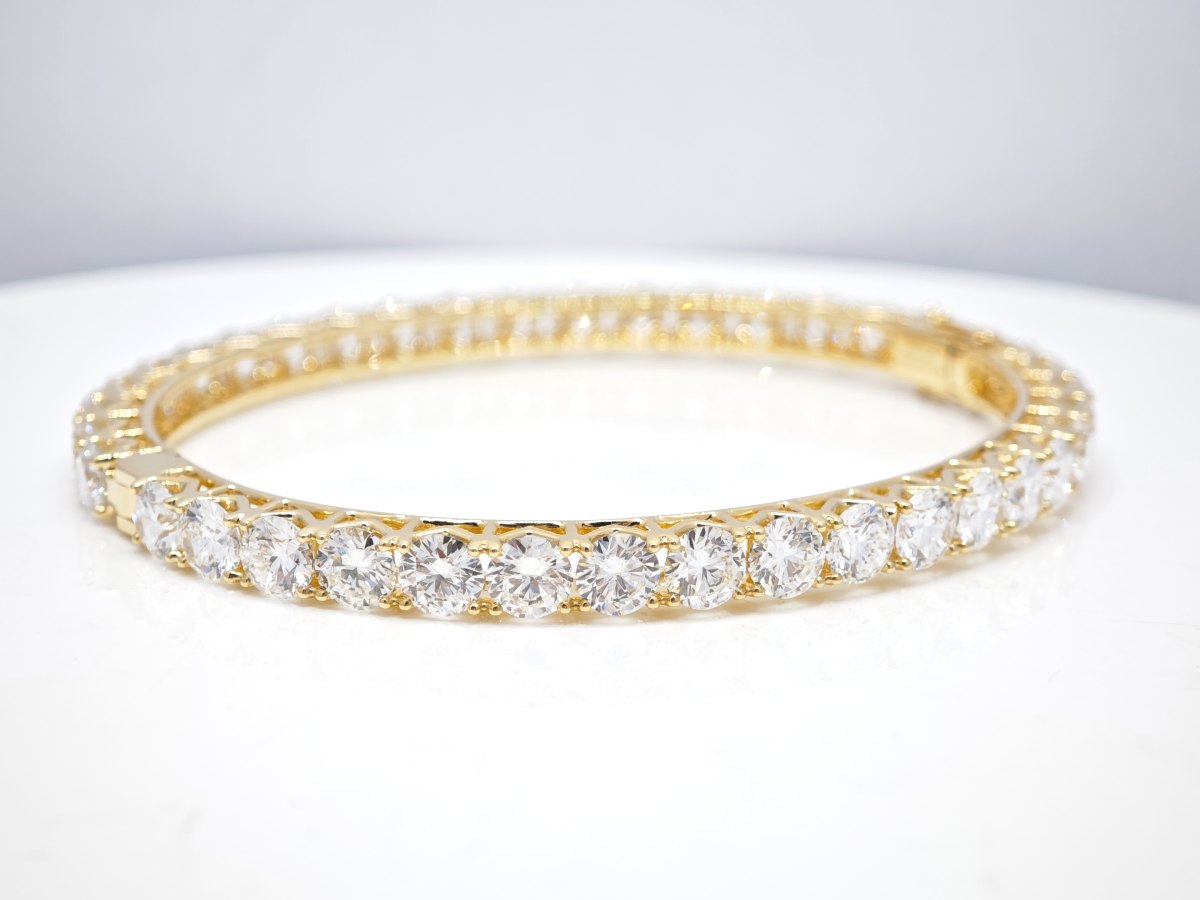
Single Row Prong Set Round Lab Cultured Diamond Glamorous Tennis Bangle Bracelet
from $20,800
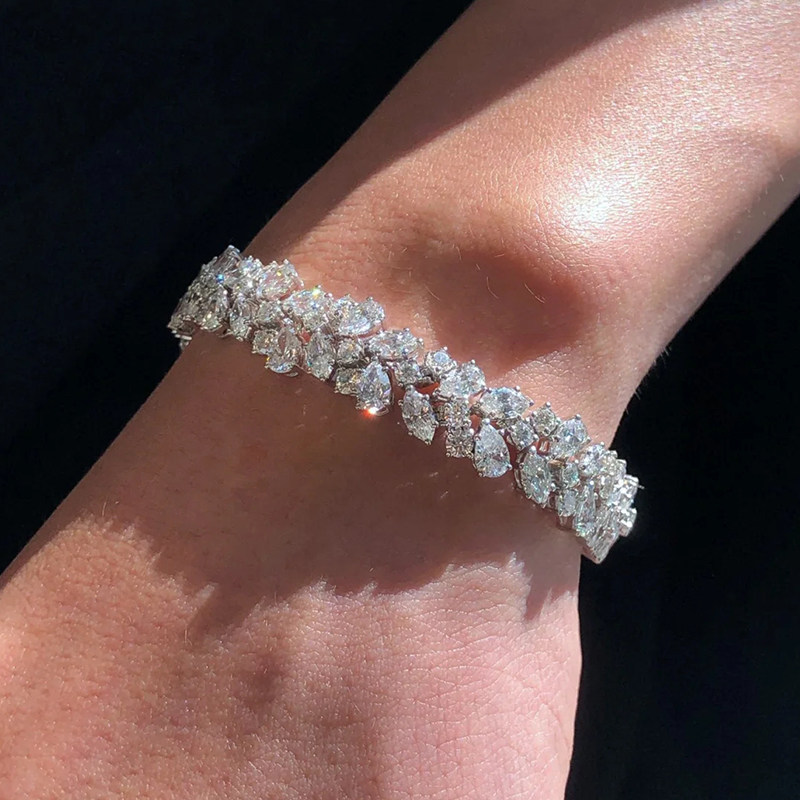
Alternating Pear & Marquise & Round Mixed Fancy Cut Full Pave Lab Diamond Linear Bracelet
from $36,530
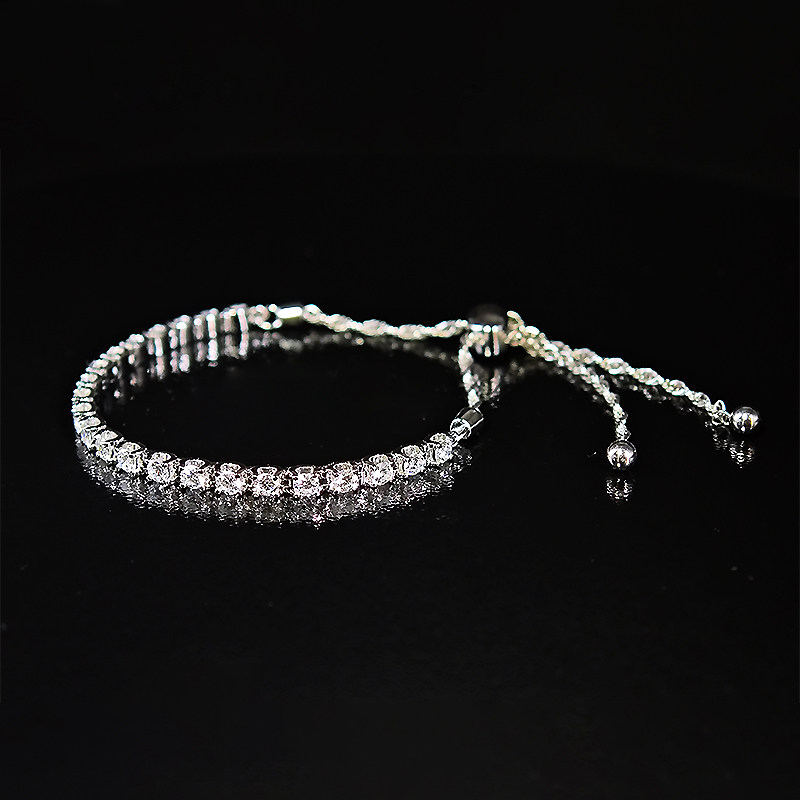
Bullhead Linear Setting Round Lab Created Diamond Bracelet
Price on enquiry
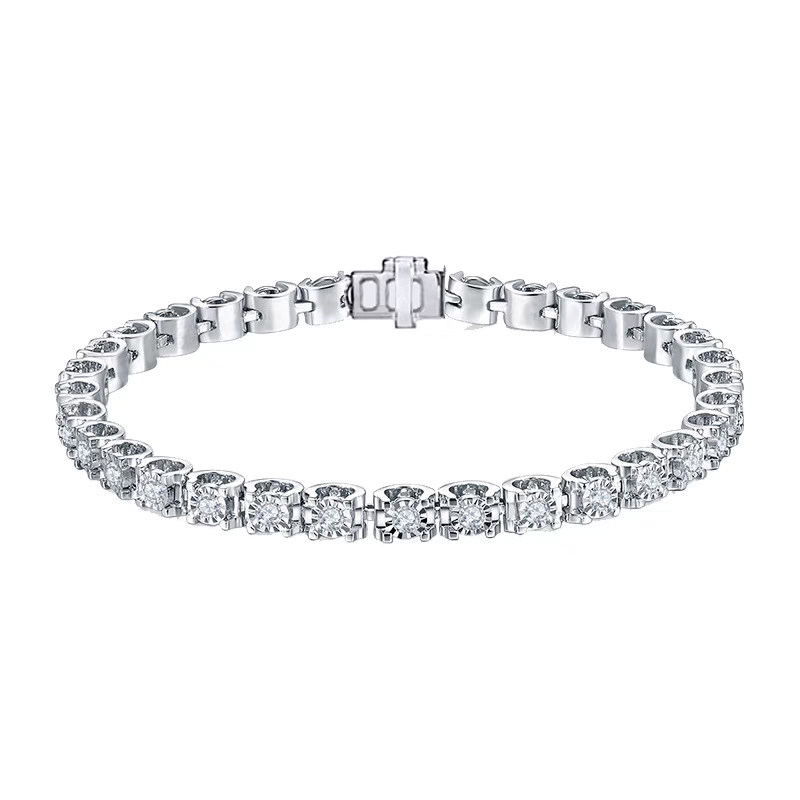
Classic Bull Head Set Round Cut Lab Cultured Diamond Tennis Bracelet
Price on enquiry
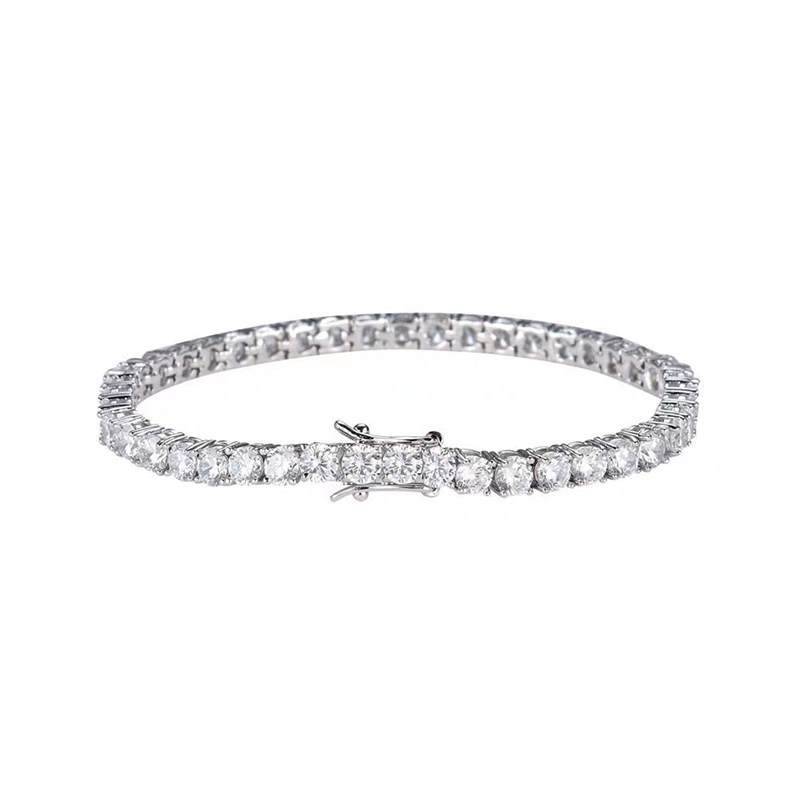
Classic Individual 4 Prong Round Cut Dual Layer Open Gallery Tennis Bracelet
Price on enquiry
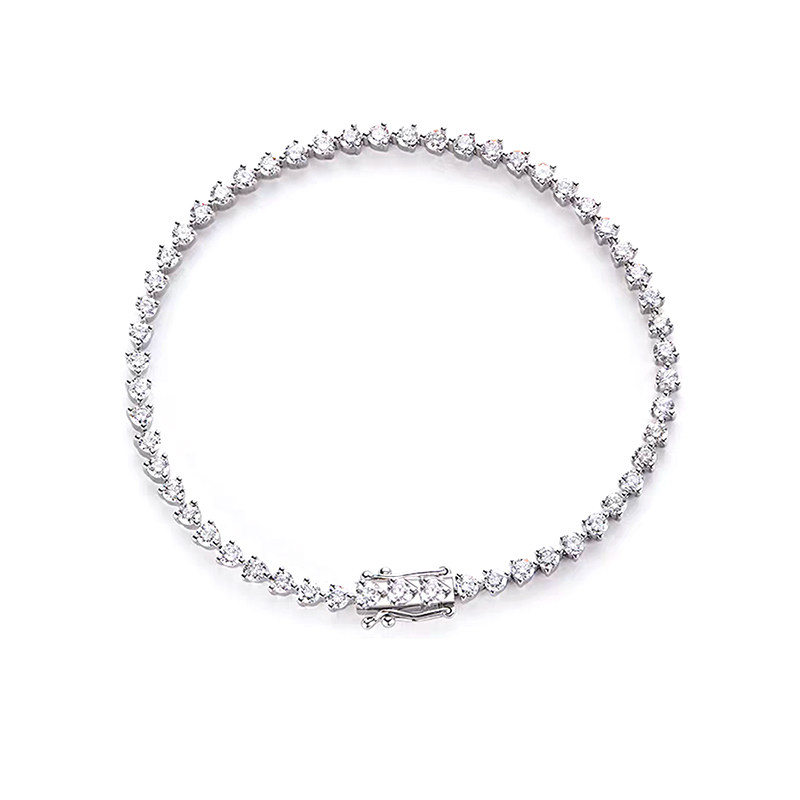
Continuous 3 Prong Round Cut Dual Layer Open Gallery Lab Diamond Tennis Bracelet
Price on enquiry
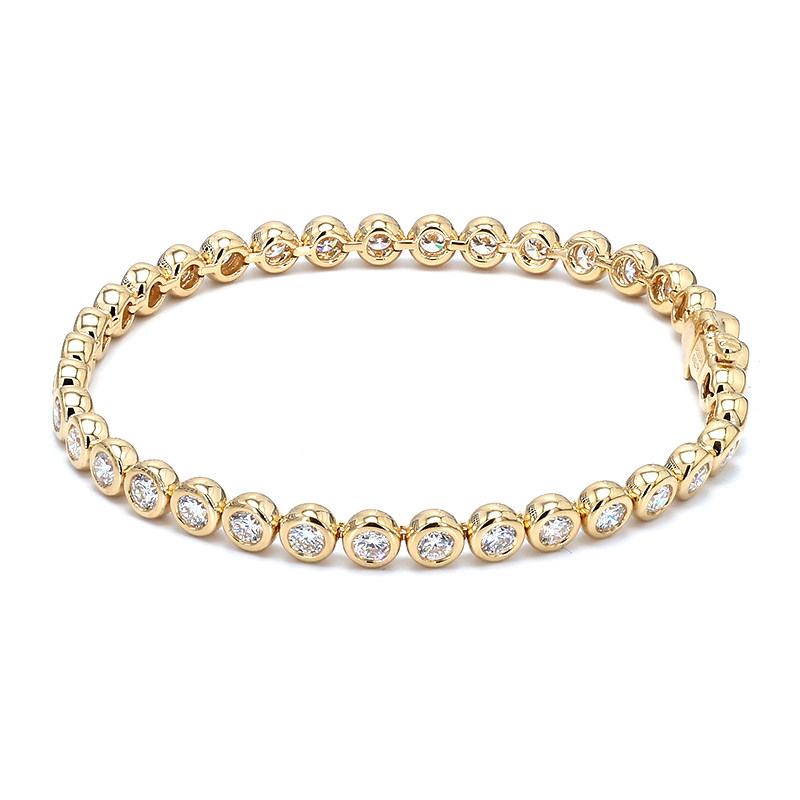
Continuous Bubble Bezel Open-Bottom Set Cultivated Diamond Tennis Bracelet
Price on enquiry
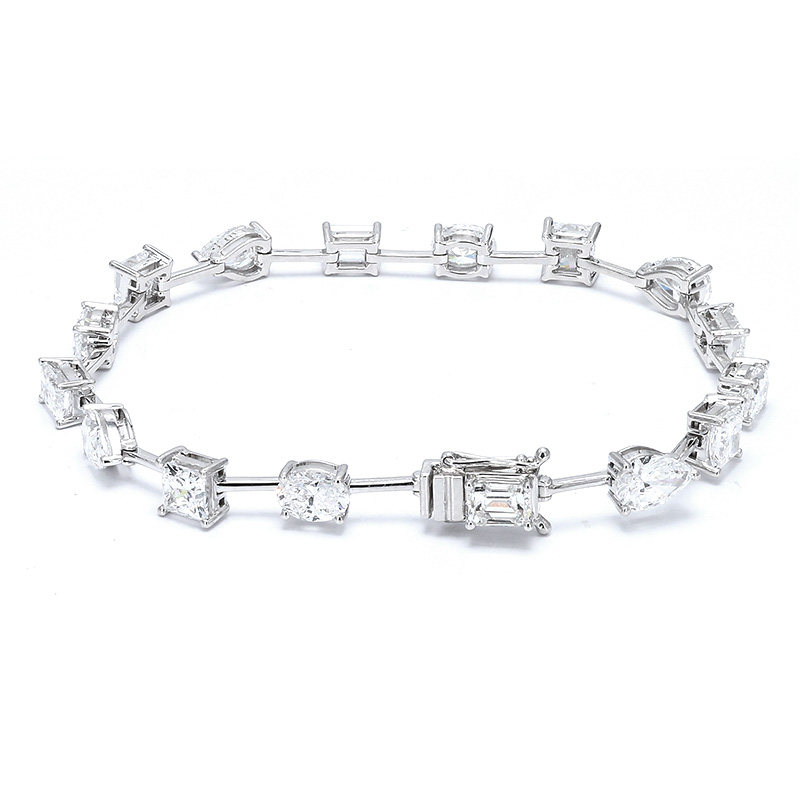
Fancy Shape Dual Layer Open Gallery Alternating Lab Diamond Tennis Bracelet
Price on enquiry
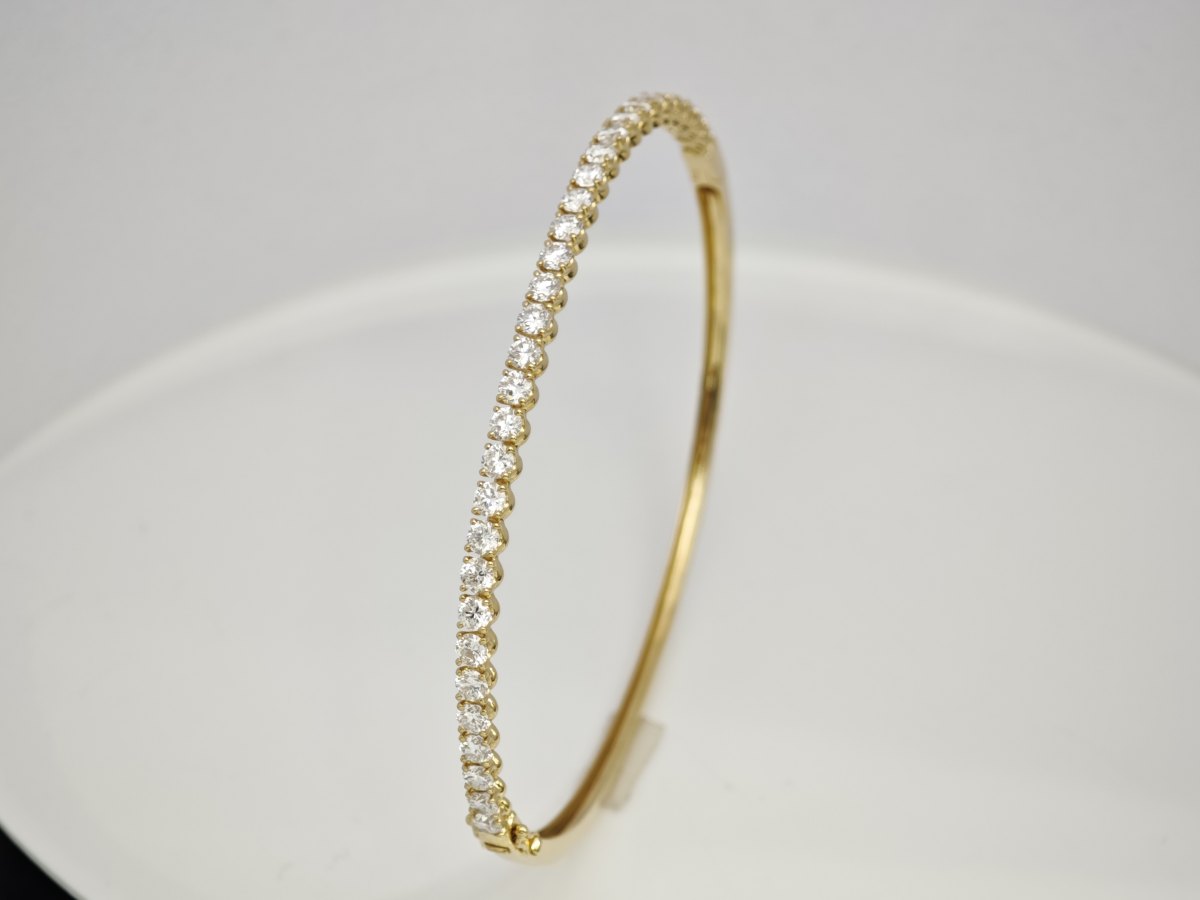
Half Pavé Round Lab Cultured Diamond Polished Classic Tennis Bangle
Price on enquiry
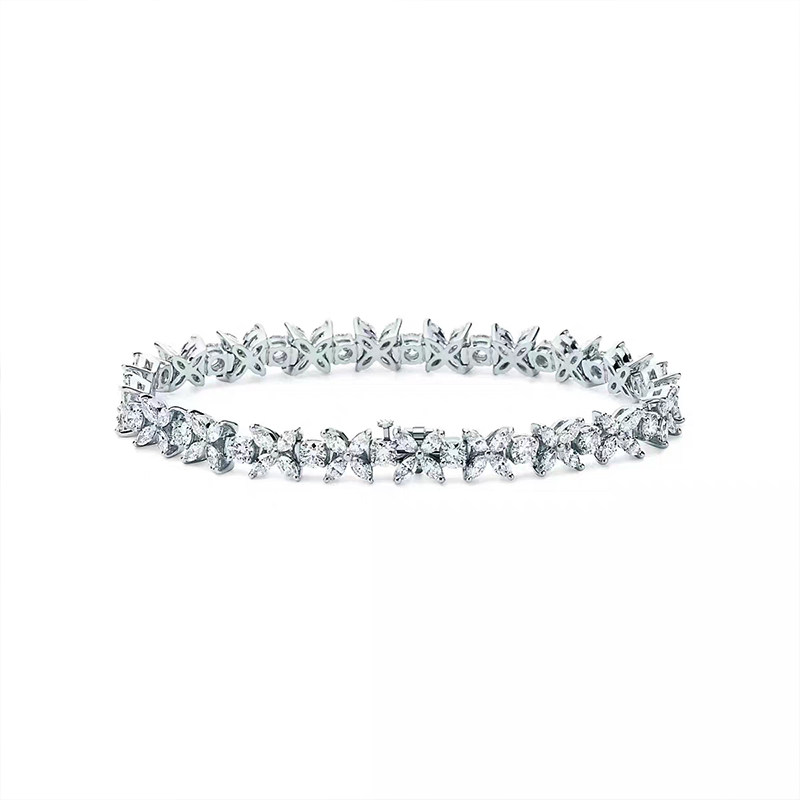
Marquise Cut Floral Motif & Round Accents Alternating Diamond Tennis Bracelet
Price on enquiry
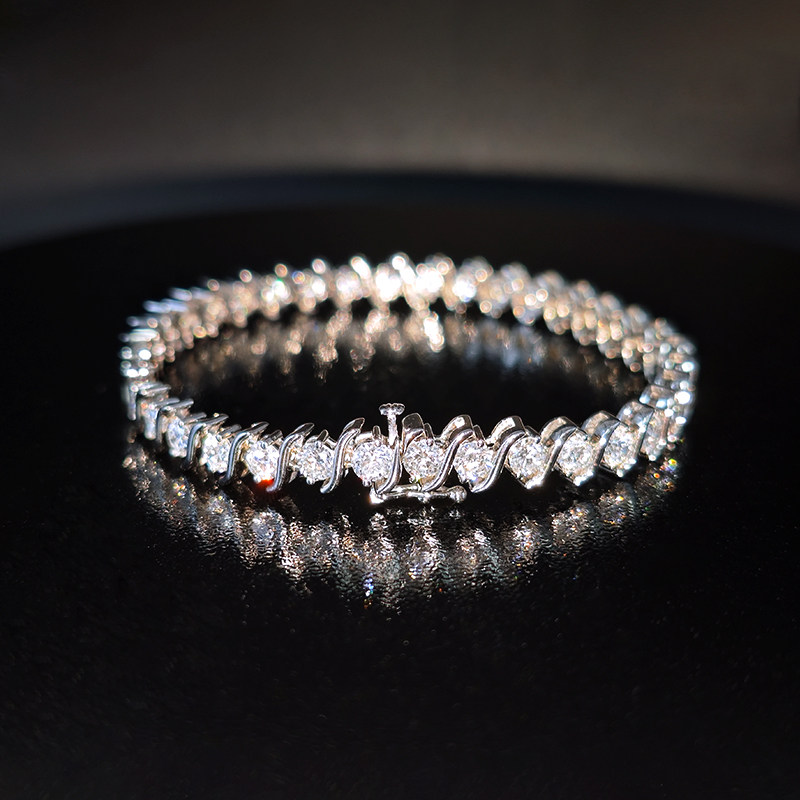
Twisted Wave Prong Open Dual Layer Gallery Round Lab Diamond Tennis Bracelet
Price on enquiry
How to choose a tennis bracelet
Three decisions, in this order: total carat weight, setting style, then length. Carat weight sets the price and the presence — the same design at 3ct and at 10ct is a different piece of jewellery. Setting style decides how it wears day to day. Length is the one that has to be right first time, because a tennis bracelet cannot be shortened without removing diamonds.
If this is an everyday bracelet, weight the decision towards bezel or channel setting and a slightly snugger fit. If it is for occasions, prongs and a looser drape will give you more light off the stones.
The settings we build
- Four-prong line. The original. Each diamond sits in its own four-prong basket, linked to the next so the row bends around the wrist. Prongs hold the stone high and leave the pavilion open, which is why a prong-set line throws more light than any other construction here.
- Bezel set. A metal rim wraps each stone. Nothing catches on knits or hair and nothing can snag a prong loose, so this is the one to wear daily and to sleep in. The trade-off is a slightly softer sparkle, because the rim covers the girdle.
- Channel set. Diamonds sit shoulder to shoulder between two walls of metal, with no prongs at all. The flattest and most protective option, and the most forgiving if the bracelet spends its life under a shirt cuff.
- Shared prong. Neighbouring stones share their prongs, so less metal shows between diamonds and the line reads as one continuous band of light. It buys the look of a heavier bracelet at the same carat weight.
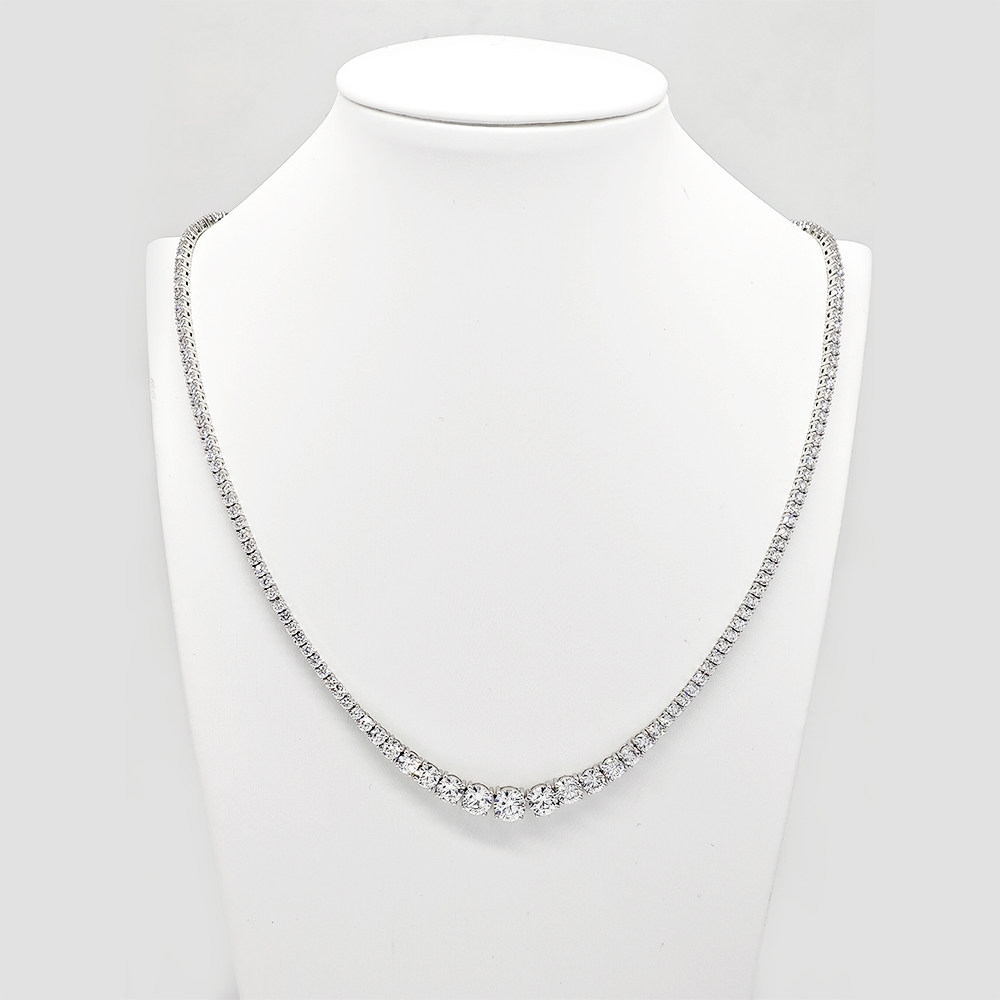
- Graduated riviera. Stones step up in size towards the centre of the wrist. A riviera puts its weight where the bracelet is actually seen, so it looks substantially larger than a uniform line of the same total carat.
- Fancy and alternating cuts. Marquise, pear and baguette shapes, alone or alternating with rounds. Elongated cuts cover more wrist per carat than brilliants do, which is what gives the art-deco designs their width.
Getting the length right
Wrap a tape measure around the wrist just below the wrist bone, pull it snug, and add 1.5 cm for a close fit or 2 cm for a bracelet that moves. Standard lengths run 15 to 19 cm; 17 cm fits most adult wrists.
A tennis bracelet should rotate freely but not slide over the hand. Too loose and the line turns over on itself and shows you the gallery instead of the stones — the most common fit mistake, and the reason a bracelet bought a size up rarely gets worn.
Frequently asked questions
- What is a tennis bracelet?
- A flexible line of matched diamonds set end to end around the wrist, with no clasp feature interrupting the row. The name dates to the 1987 US Open, when Chris Evert stopped play to look for the diamond line bracelet that had come off mid-match — the style has been called a tennis bracelet ever since.
- How much does a lab diamond tennis bracelet cost?
- Our tennis bracelets start around the low four figures and run into five, and the spread is almost entirely total carat weight. A lab-grown diamond costs 60–80% less than a mined stone at the same grade, and because a tennis bracelet uses 20 to 60 stones rather than one, that saving compounds harder here than anywhere else in the collection.
- What length tennis bracelet should I buy?
- Measure the wrist snugly and add 1.5–2 cm. Standard lengths run 15 to 19 cm (roughly 6 to 7.5 inches); 17 cm is the most common. Every bracelet is made to order, so the length is set when you order rather than altered afterwards — a tennis bracelet cannot be shortened cleanly the way a chain can, because removing links removes diamonds.
- Which metal should I choose?
- Every design is made to order in 10K, 14K or 18K gold, sterling silver or platinum. White metals — white gold, platinum, silver — disappear against the diamonds and make the line read as pure stone. Yellow and rose gold outline each setting and make the bracelet read warmer and more visible. Platinum is the most durable of the five and the only one that will not need re-plating.
- Are lab-grown diamonds real diamonds?
- Yes. A lab-grown diamond is the same carbon lattice as a mined one — same hardness, same refractive index, same appearance under a loupe. It is graded on the same 4Cs scale by the same laboratories. The only difference is where it crystallised.
- Will a tennis bracelet fall off?
- The clasp is the whole answer. Ours use a box clasp with a figure-eight safety catch, so the catch has to fail as well as the clasp before the bracelet can come off. Have the clasp checked yearly, the same as you would a ring setting — that is the part that wears, not the line.
Matching tennis necklaces
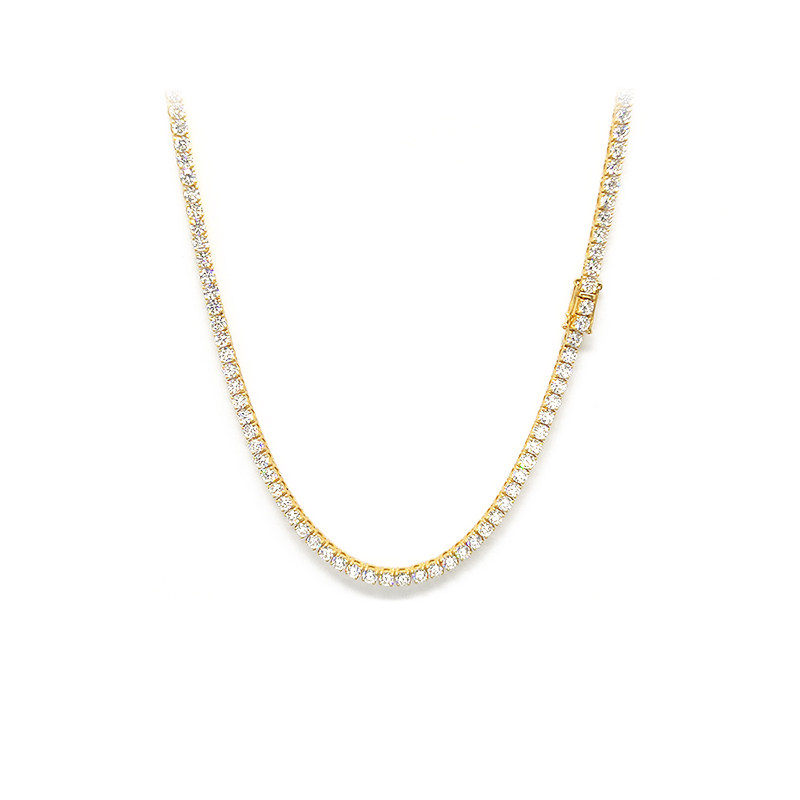
The same continuous line, worn at the throat. Ordered together they are matched for colour and cut across both pieces.